Discover how energy efficiency delivers ten key advantages for Vietnamese businesses, from cost savings to operational resilience. Learn which strategies drive the strongest impact.
1. Energy Efficiency: Key Benefits Every Vietnamese Business Should Leverage
Energy efficiency has become a strategic priority for enterprises across Vietnam as energy costs rise and regulatory standards tighten. For many industries, optimizing energy use is no longer merely a cost-saving measure; it is a pathway to greater resilience, competitiveness, and sustainability. This article outlines ten essential benefits of adopting energy-efficient practices, helping businesses understand why this shift is both economically and operationally necessary in today’s market.
What Energy Efficiency Means for Businesses
Energy efficiency refers to the ability to maintain or improve output while reducing energy consumption. For enterprises, it encompasses optimized equipment performance, smart operational processes, and effective monitoring systems that ensure energy is utilized with minimal waste. This concept extends beyond utilities management; it influences production planning, technology adoption, and the broader business model.
Why Vietnamese Businesses Need Energy Efficiency
Vietnam’s energy landscape presents several challenges, including rising electricity tariffs, pressure to reduce emissions, and the need to modernize industrial infrastructure. These factors make energy efficiency not only relevant but essential. Businesses that prioritize energy optimization are better positioned to adapt to regulatory changes and respond to fluctuating market demands.
2. Key Benefits of Energy Efficiency
Adopting energy-efficient practices offers more than just cost savings—it transforms how businesses operate, innovate, and compete. By optimizing energy use, companies not only reduce expenses but also enhance operational resilience, improve productivity, and strengthen their market position. The following sections outline ten key benefits that Vietnamese businesses can leverage to maximize both economic and strategic advantages.
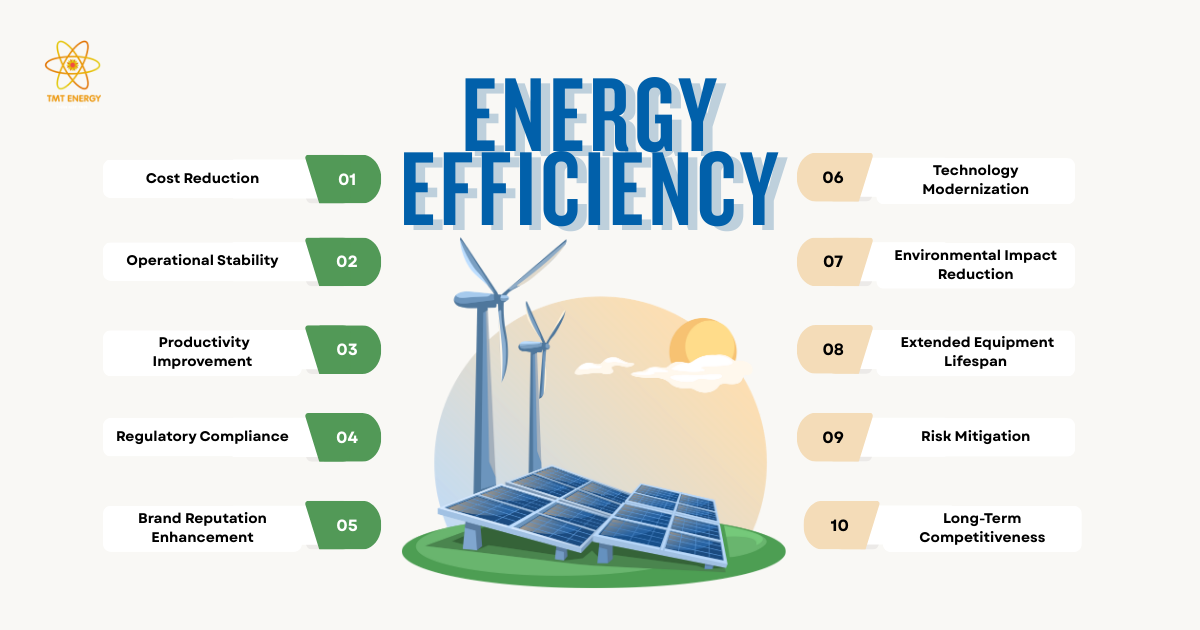
- Cost Reduction: Energy efficiency directly lowers operational costs by reducing electricity consumption. For energy-intensive industries, this contributes substantially to profit margins and frees capital for reinvestment into growth initiatives.
- Operational Stability: Efficient energy systems mitigate risks of overload and equipment failure. Stable energy consumption patterns help businesses maintain consistent production output and avoid costly downtime.
- Productivity Improvement: Modern, energy-efficient equipment tends to perform more reliably and with higher precision. This increases production speed, enhances quality control, and reduces labor-related inefficiencies.
- Regulatory Compliance: Vietnam has strengthened energy and environmental regulations. Implementing energy-saving measures enables businesses to comply with standards and avoid penalties or compliance-related disruptions.
- Brand Reputation Enhancement: Consumers and investors increasingly value sustainability. Companies adopting energy-efficient practices demonstrate corporate responsibility and strengthen their brand image in both domestic and international markets.
- Technology Modernization: Energy-efficient operations often require adopting modern technologies such as automated monitoring systems, high-efficiency machinery, and renewable energy integration. This accelerates digital transformation and operational modernization.
- Environmental Impact Reduction: Reducing energy waste helps decrease greenhouse gas emissions and supports Vietnam’s national goals for climate mitigation. This strengthens the enterprise’s sustainability profile.
- Extended Equipment Lifespan: Efficient energy use reduces equipment strain, lowers maintenance frequency, and prolongs machinery lifespan. This contributes to predictable capital expenditure and long-term asset optimization.
- Risk Mitigation: Energy efficiency helps businesses manage risks related to electricity price volatility, supply shortages, and energy policy shifts. A more efficient system enhances resilience during market fluctuations.
- Long-Term Competitiveness: Enterprises that optimize energy usage achieve lower costs, higher stability, and stronger market positioning. Energy efficiency thus becomes a long-term competitive strategy for sustainable growth.
3. Conclusion
Energy efficiency offers significant economic, operational, and strategic advantages for Vietnamese businesses. As the market becomes increasingly competitive and regulations tighten, organizations that implement energy-efficient solutions will enhance their performance, strengthen resilience, and ensure sustainable long-term growth.
