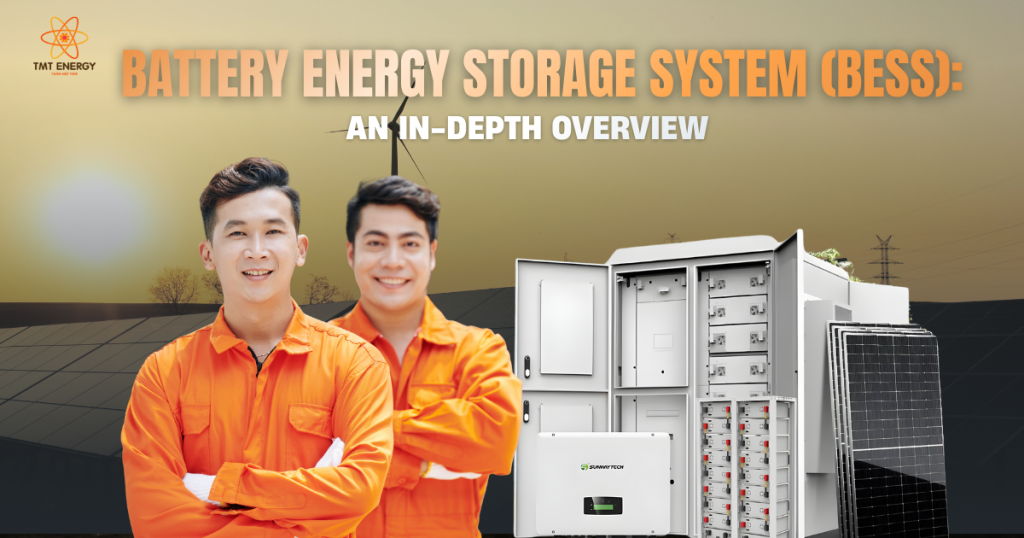
Battery Energy Storage Systems (BESS) enable industrial and commercial users to store electricity and actively manage how and when energy is consumed. By charging during off-peak periods and discharging during high-demand hours, BESS helps reduce peak demand charges, optimize overall energy costs, and improve cost predictability. At the same time, BESS enhances power reliability by providing backup energy and stabilizing voltage for critical operations. When integrated with renewable energy sources such as solar or wind, BESS maximizes clean energy utilization, minimizes curtailment, and supports long-term sustainability and ESG objectives through advanced battery and energy management technologies.
>> How Battery Energy Storage Systems Deliver Long-Term Cost Savings
What Is a Battery Energy Storage System (BESS)?
A Battery Energy Storage System (BESS) is a fully integrated energy solution designed to store electrical energy and discharge it when needed, enabling businesses to actively manage how, when, and where electricity is consumed. Rather than relying solely on real-time power supply from the grid, BESS allows energy to be stored during favorable conditions and strategically used to support operational efficiency, cost control, and energy security. Today, BESS is widely implemented across industrial facilities, commercial buildings, and renewable energy projects as a core component of modern, resilient power systems.
- Energy storage capability
At its core, BESS captures electricity generated either from the grid or from renewable energy sources such as solar and wind. This stored energy can then be used later, allowing businesses to decouple energy consumption from energy generation. As a result, excess power produced during low-demand periods or high renewable output is no longer wasted but retained for periods when electricity demand or tariffs are higher. - Advanced battery technology
Most modern BESS solutions are built on lithium-ion battery technology, with Lithium Iron Phosphate (LFP) batteries being the preferred choice for industrial and commercial applications. LFP batteries are recognized for their high safety standards, strong thermal stability, and long operational lifespan—often exceeding ten years. These characteristics make them particularly suitable for continuous, high-load environments where reliability and safety are critical. - Integrated system design
A complete BESS is more than just a battery. It is a coordinated system that includes battery modules, power conversion systems (PCS), battery management systems (BMS), and advanced energy management software (EMS). Together, these components operate as a single intelligent unit, monitoring system performance, controlling charge–discharge cycles, and optimizing energy flows in real time to maximize efficiency and system longevity. - Flexible deployment
BESS can be deployed in a wide range of configurations and capacities, depending on project requirements. From behind-the-meter systems supporting factories and commercial buildings to large-scale, grid-connected installations for renewable energy plants, BESS offers exceptional flexibility. This scalability allows organizations to tailor energy storage solutions to their specific operational, financial, and sustainability objectives.
How BESS Works in Practice
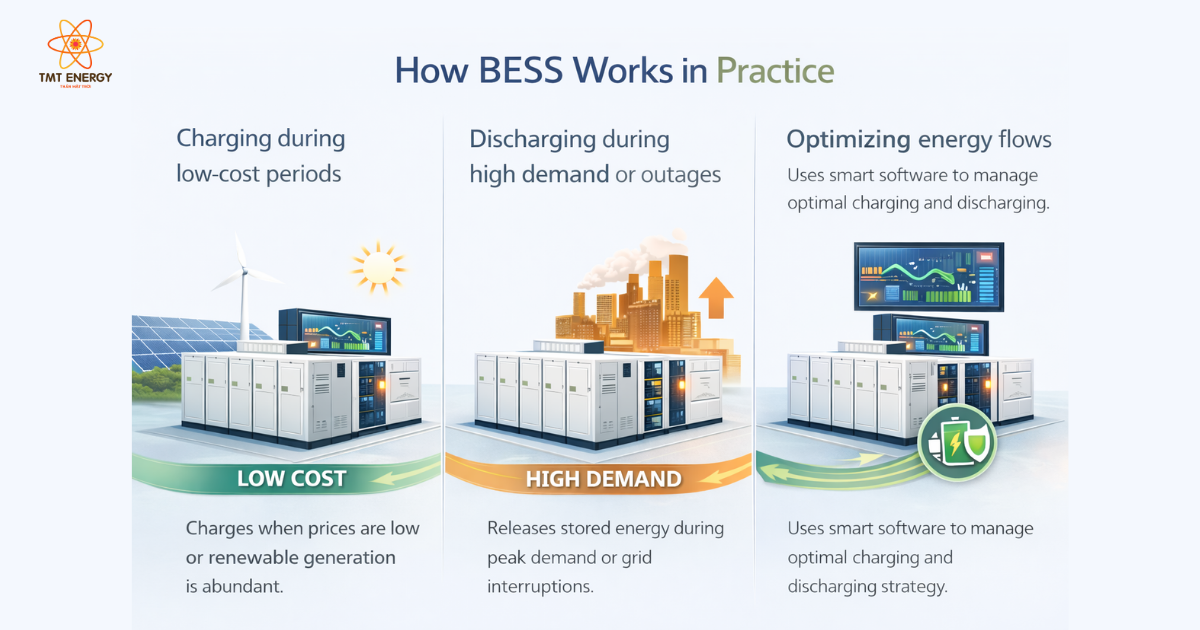
A Battery Energy Storage System (BESS) operates by intelligently shifting electricity consumption across different time periods, enabling users to consume energy when it is most economical or operationally valuable. Instead of drawing power from the grid only at the moment it is needed, BESS introduces flexibility into the energy system by storing electricity and dispatching it strategically based on demand, pricing, and system conditions.
- Charging during low-cost periods
BESS is typically charged when electricity prices are low or when renewable energy generation is abundant. This often occurs during off-peak hours from the grid or during periods of high solar or wind output. By capturing energy at these times, the system allows businesses to take advantage of lower tariffs and surplus clean energy that might otherwise be curtailed. - Discharging during high demand or outages
When electricity demand increases, prices rise, or grid interruptions occur, BESS discharges stored energy to support operations. This reduces reliance on expensive peak electricity and helps maintain continuous power supply during outages or unstable grid conditions. As a result, businesses can lower peak demand charges while improving overall power reliability. - Optimizing energy flows
Advanced energy management software plays a central role in BESS operation. The system continuously monitors load profiles, electricity tariffs, battery status, and grid conditions to determine the most effective charging and discharging strategy. This real-time optimization ensures that energy is used in the most efficient and cost-effective manner, while also protecting battery health over the long term. - Supporting renewable integration
By storing excess electricity generated from renewable sources, BESS minimizes energy curtailment and increases the usable share of clean power. This capability not only improves overall system efficiency but also enables higher penetration of renewable energy within industrial and commercial power systems, supporting long-term decarbonization and sustainability goals.
Key Benefits of Battery Energy Storage Systems
Battery Energy Storage Systems (BESS) create value not only through direct cost savings, but also by improving operational resilience, long-term efficiency, and sustainability performance. For industrial and commercial users, BESS becomes a strategic energy asset that enhances both financial and operational outcomes.
- Reduced electricity costs
By lowering peak demand and shifting electricity consumption to off-peak periods, BESS helps businesses significantly reduce demand charges and exposure to volatile electricity prices. This time-based energy optimization leads to more predictable monthly energy expenses and improves overall cost control, especially for facilities with high and fluctuating power demand. - Improved power reliability
BESS enhances energy reliability by providing instant backup power for critical loads during grid disturbances or outages. This reduces dependence on diesel generators, minimizes production downtime, and protects sensitive equipment from voltage fluctuations, ensuring stable and uninterrupted operations. - Long-term operational efficiency
With proper system design, advanced battery management, and intelligent energy control, BESS delivers consistent performance over many years. Compared to traditional backup solutions, battery systems require lower routine maintenance, offer higher operational flexibility, and maintain efficiency throughout their lifecycle. - Environmental and ESG benefits
By supporting renewable energy integration and reducing reliance on fossil-fuel-based backup power, BESS helps lower indirect carbon emissions (Scope 2). This aligns businesses with corporate ESG commitments, decarbonization roadmaps, and evolving regulatory requirements, while reinforcing long-term sustainability strategies.
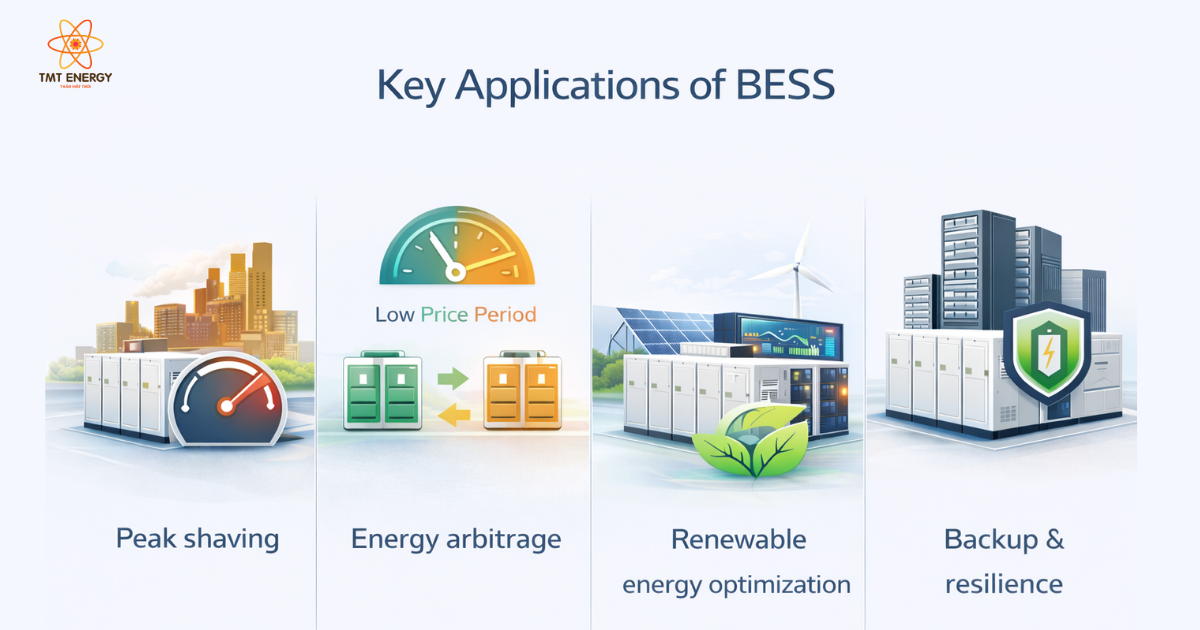
Key Applications of BESS
Battery Energy Storage Systems (BESS) are widely deployed across multiple industries and operational scenarios, helping businesses address energy cost challenges, improve reliability, and support the transition toward cleaner energy systems.
- Peak shaving and load management
BESS is commonly used to reduce maximum grid demand during peak hours by supplying stored energy instead of drawing power from the grid. This effectively lowers peak demand charges, smooths load profiles, and helps facilities maintain stable electricity costs, particularly in energy-intensive operations. - Energy arbitrage
By charging batteries when electricity prices are low and discharging when prices are high, BESS enables businesses to actively manage energy costs. This price-based optimization improves cost predictability and allows users to benefit from time-of-use tariffs and dynamic pricing structures. - Renewable energy optimization
BESS stores excess electricity generated from renewable sources such as solar or wind, preventing energy curtailment and maximizing self-consumption. This increases the overall efficiency of renewable energy systems and supports higher penetration of clean energy within industrial and commercial facilities - Backup and resilience
BESS provides reliable backup power during grid outages, ensuring continuous operation for factories, data centers, and other critical facilities. Unlike conventional generators, battery systems offer instant response, silent operation, and lower environmental impact, enhancing overall energy resilience.
Why Choose TMT Energy?
As energy costs rise and sustainability requirements become more stringent, businesses need more than just clean energy solutions — they need financially optimized, reliable, and future-ready energy systems. TMT Energy delivers integrated Rooftop Solar + Battery Energy Storage System (BESS) solutions designed to help enterprises reduce costs, improve energy resilience, and strengthen long-term competitiveness.
- Flexible investment models – from 0% to 100% CAPEX
TMT Energy offers flexible investment structures, including zero upfront capital models, allowing businesses to deploy Rooftop Solar + BESS without heavy initial investment. Clients can achieve 25–30% electricity cost savings while maintaining healthy cash flow. - International-standard technology and equipment
We deploy Tier-1 technologies and globally recognized brands such as Huawei, Sunwoda, RCT, and other certified partners. All systems meet international safety and performance standards, with warranties ranging from 10 to 15 years. - High-quality, long-life battery solutions
Our BESS solutions utilize LFP (Lithium Iron Phosphate) batteries, known for high safety, long lifecycle, stable performance, and silent operation — with no emissions, odor, or environmental pollution. - Fast and reliable project execution
From engineering and procurement to installation and commissioning, TMT Energy can complete a full Rooftop Solar + BESS system within approximately 120 days, minimizing disruption to business operations. - ESG and CBAM readiness
By integrating renewable energy and storage, enterprises can significantly reduce indirect emissions (Scope 2), improve ESG performance, and prepare for upcoming regulations such as CBAM from 2026 onward. - Trusted partner for leading enterprises
TMT Energy has partnered with and supported projects involving Toyota Motor Vietnam, EVN, PECC, and numerous large FDI manufacturers, demonstrating strong technical capability and project credibility.